
What You Need to Know About Smoke Machines
Smoke machines (also known as fog machines) are devices that can add heaps of atmosphere to a fairly plain empty space, help your lighting and lasers stand out, or add a dramatic cue to a drop, entrance or stage performance. Ever watched a DJ set where the beams from the moving heads and lasers seem to hang in mid-air, or walked into a Halloween party with fog rolling through the room? That’s a smoke machine doing the job! If you are wondering how smoke machines work, whether a fog machine is actually the same thing, or when a haze machine makes more sense, you are in the right place.
In this guide, we’ll run through the different smoke effects, explain the specifications that matter, what fluid you should use, and what you should check before using one at a venue in Australia.
Disclosure: DJ City Australia sells smoke machines, haze machines, fog machines, fluids and accessories mentioned in this guide. The information below is based on documented product features, manufacturer instructions and Australian venue guidance.
What is a smoke machine and how does it work?
Smoke machines, often called fog machines, create thick, swirling clouds that can add a moody atmosphere and intrigue to any event space. Most models heat a manufacturer-approved, water-based fog fluid and force the vapour through a nozzle. As the hot vapour meets cooler air, it condenses into tiny droplets and forms a visible aerosol that resembles smoke. No material is burned with an open flame, but the machine still has hot components, so operate it safely according to its manual.
The fluid formula, heater, pump, nozzle, fan and control settings all influence the effect. This is why machines with similar wattages can produce different results, and why it is important to use the fluid specified or approved by the manufacturer. Depending on the model, fog output can be activated manually or controlled using a timer, remote or DMX system. This lets you release anything from a short burst to a sustained atmospheric effect at the right moment. As for dry-ice fog, these machines work differently by combining dry ice with warm water to create thick fog that stays close to the floor. Other low-fog machines use normal ice, water or manufacturer-specific fluid systems, so check the exact process before buying supplies.
Smoke vs fog vs haze: What’s the difference?
Atmospheric-effect machines are built for different jobs. Some give you an obvious burst, while others create a finer layer that hangs in the air and reveals your light beams. Below are the main differences between smoke, fog, low-fog and haze or fazer effects:
| Effect | What it looks like | Best suited to | Typical behaviour | Main limitation |
|---|---|---|---|---|
| Smoke or fog | Dense, visible bursts or clouds | Parties, reveals, Halloween effects and timed stage moments | Builds quickly, then disperses according to airflow and fluid type | Can obscure sightlines and overwhelm a small room if output is too high |
| Haze | Fine, even atmosphere that makes beams visible | DJ lighting, lasers, concerts, clubs and longer events | Usually designed for gradual, sustained coverage | Less suitable when you want an obvious burst of fog |
| Fazer | A fan-assisted effect between fog and haze | Mobile DJs and venues wanting adjustable atmospheric coverage | Spreads fog more evenly than a basic burst-style machine | The result and fluid requirements vary by model |
| Low fog | Clouds that stay near the floor | Wedding entrances, dance performances, theatre and dramatic reveals | Uses cooling, ice, water, specialised fluid or another model-specific process | Costs more, needs more preparation and can be disrupted by airflow |
Standard smoke or fog

A standard machine produces a thick, visible cloud that billows out of the nozzle like a smoke stack, rises and fills the room before dispersing according to the airflow and fluid type. It suits Halloween parties, concerts, theatrical productions and any moments where you’ll need an obvious burst of smoke as part of the effect.
Low-lying fog
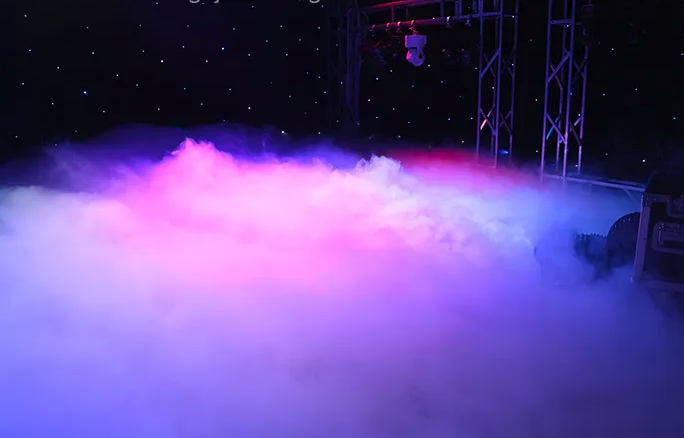
Low fog stays close to the ground and is popular for wedding first dances, theatre, dance performances and dramatic reveals. The effect may be created with dry ice, normal ice, water or a specialised fluid system, depending on the machine.
Haze

A haze machine generates a finer mist similar to the fog you see at dawn, which can remain in the air longer than an obvious fog burst. It is useful when you want lighting effects and laser beams to remain visible through a set or performance.
Fazer

A fazer sits between standard fog and haze. It uses fog fluid and a fan to create an effect that is lighter and more evenly dispersed than a typical fog burst. The fan-assisted output also gives you more control over how the atmosphere spreads through the space and the direction of the smoke.
Choose standard smoke or fog when…
You want thick, visible clouds or a controlled burst on cue. Standard fog suits Halloween parties, clubs, concerts, live performances and theatrical productions where atmosphere or precise timing matters.
Browse DJ City’s smoke machines.
Choose haze when…
You want to highlight beams from lasers, moving heads and stage lights without filling the room with an obvious cloud. Haze suits nightclubs, festivals, gigs, film sets, performances and concerts where the effect needs to remain more consistent.
Browse DJ City’s haze machines.
Choose low fog when…
You want a floor-hugging cloud with clearer sightlines at eye level, and you can allow extra time for preparation and venue approval. It is commonly used for first dances, theatre and dramatic entrances.
Browse DJ City’s low-fog machines.
Choose a fazer when…
You want a fan-assisted effect that spreads more evenly than a basic fog burst. Check the model’s compatible fluid and controls because the density and output vary between machines.
Browse DJ City’s haze and fazer machines together.
Which type of smoke machine do you need?
You should start by choosing the machine based on the effect you desire and operating environment, instead of using wattage as the only deciding factor. A useful shortlist should answer the following questions:
What space are you filling?
A compact home party needs controllable output and a remote that lets you stop the effect quickly. For more ideas, see our party-lighting guide for small spaces. Mobile DJs and small stages will need predictable smoke fluid warm-up times, convenient compact transport, and a timer or DMX option. Larger venues may need greater rated output or more than one carefully placed machine. Check with the venue owner or your event manager for the final say.
How will air move through the space?
Air-conditioning, open doors, ceiling height, crowds and fans can change the effect, so it’s important to take that into consideration when setting up your smoke machine. Outdoor use is pretty unpredictable because wind can disperse fog before it becomes visible. Additionally, make sure you put the machine in a sheltered position where event-goers won’t trip over it, and protect it from moisture.
How do you want to trigger it?
- Push-button remote: Simple manual bursts for a home party or occasional effect.
- Timer remote: Repeating output with adjustable duration and interval.
- Wireless remote: Convenient triggering without a control cable across the room.
- DMX: Programmed cues and coordination with a lighting rig. Read our beginner’s guide to DMX before planning channels and addresses.
What other equipment are you using?
Atmosphere works best when it supports the lighting instead of hiding it. Haze is often useful for steady beam definition, while a timed fog burst suits a drop, reveal or Halloween cue. Our mobile DJ lighting guide and guide to party-light effects can help you plan the rest of the rig.
What fluid does a smoke machine require?
Fog fluids can vary in density, hang time and dissipation, but those labels do not make every fluid compatible with every machine. Check the manual before choosing standard, dense or quick-dissipating fluid. Tank size alone does not establish runtime because output level, trigger frequency and reheating behaviour all affect consumption.
Where might you use it?
- Halloween parties for a spooky atmosphere
- Hens and bucks nights for timed fog effects
- Weddings for entrances, dancing and photographs
- Birthday parties alongside suitable effect lighting
- Nightclubs and performances where the venue permits atmospheric effects
What do smoke-machine specifications actually mean?
Specifications are useful for narrowing a shortlist, but they do not guarantee how a machine will perform in your room. Compare models using several measurements together:
| Specification | What it tells you | What to check |
|---|---|---|
| Heater wattage | The electrical rating of the heater, not a complete measure of coverage | Rated output, warm-up, repeat cycle and control range as well |
| Rated output | The manufacturer’s stated fog volume, often in cubic metres or cubic feet per minute | Whether brands use comparable test methods and whether output is adjustable |
| Warm-up time | How long the heater needs before the first output | Whether reheating pauses occur during use |
| Duty or repeat cycle | How the machine alternates between output and reheating | Whether the model can sustain the effect you need |
| Tank capacity | How much compatible fluid the machine can hold | Fluid consumption at your intended setting, because tank size alone does not establish runtime |
| Controls | How you trigger and adjust the effect | Included remote, timer range, output adjustment, DMX channels and connector type |
| Mounting options | Whether the manufacturer permits suspended or angled installation | Approved orientation, clamp, safety cable, load rating and required clearances |
How do you set up and use a smoke machine?
- Confirm venue approval. Identify the room, fire-detection requirements, permitted operating area and responsible venue contact.
- Read the manual and fluid label. Check the required fluid, voltage, orientation, ventilation and clearances.
- Inspect the unit. Check the power lead, plug, tank, hose, cap, nozzle, remote and mounting hardware. Do not use damaged equipment.
- Place it safely. Keep the hot nozzle and output path away from people, fabric, decorations, walls and equipment. Keep exits and walkways clear.
- Fill with compatible fluid. Use the product named or approved by the manufacturer. Do not mix products or add water, oils, fragrances or homemade ingredients unless the manual explicitly permits it.
- Connect the controls. Attach the supplied remote or make the DMX connection before energising the unit if the manual instructs you to do so.
- Allow full warm-up. Wait for the ready indicator instead of repeatedly pressing the output control.
- Test conservatively. Start with the lowest practical output while the venue contact is present. Confirm sightlines, floor condition and alarm arrangements.
- Monitor during the event. Watch the fluid level, visibility, airflow, audience response and any change in venue conditions. Never run the pump dry.
- Shut down and cool. Follow the manual, disconnect power when instructed, allow hot surfaces to cool, then drain or secure the tank for transport and storage.
Are smoke machines safe?
They can be, provided the machine is suitable for the space, the venue has approved it, and you follow the manufacturer’s instructions. This is the part worth sorting out before the machine goes anywhere near the dance floor because every room handles fog differently, and the same goes for alarm systems and the people in the space. Check that you have the approved fluid, enough ventilation and the clearances listed in the manual. If the fog starts hiding exits or making anyone uncomfortable, back the output off and let the room clear.
Fire alarms and permission
Your first call should be to the venue. Fog and haze can set off smoke detectors, and there is not one rule covering every Australian venue. Some venues ban atmospheric effects, while others may allow them when arranged in advance and can charge you for an alarm call-out. Get the answer in writing and ask how the venue wants testing handled before your event.
Hot surfaces and placement
The nozzle and the area around it can get very hot, even on a fairly small machine. Give it a clear spot where guests won’t brush past it, route the cable away from foot traffic and aim the output into open space. The manual will tell you how much clearance the unit needs and whether it can be mounted or operated at an angle.
Visibility and floor conditions
It’s easy to get carried away once the lights start looking good through the fog. If you can’t clearly see steps, cables or exit signs, the output is too high. Have a quick look at the floor as well, because spilled fluid or condensation around the machine can leave a slippery patch.
Dry ice and carbon dioxide
A low-fog setup that uses dry ice needs a bit more planning. Dry ice can cause cold burns, and it releases carbon dioxide as it warms up. Safe Work Australia highlights the handling and asphyxiation risks, so you’ll need the right gloves and eye protection, good ventilation and somewhere suitable to store it. Check your machine before buying supplies too, as plenty of low-fog models use water, chilled fluid or another system instead.
Which smoke-machine fluid should you use?
“Water-based” does not mean that plain water belongs in the tank! It describes a formulated fog fluid intended for compatible equipment. Density, hang time, and dissipation can vary, but the machine manual, not the desired effect alone, should determine which fluid you use.
- Use only fluid approved for the exact machine.
- Do not combine leftover fluids unless the manufacturer confirms compatibility.
- Keep fluid in its labelled original container and away from food and drink.
- Do not ingest fog fluid or describe it as safe to consume.
- Clean spills promptly and prevent people from walking through the affected area.
- Never let the pump run without fluid.
Ran out of fluid? DJ City stocks a wide range of smoke fluids and haze fluids for all the major brands, like Antari, Chauvet, AVE and Beamz.
Cleaning instructions vary. Some manufacturers specify a proprietary cleaning solution or a particular flushing routine, while others warn against homemade mixtures. Follow the manual for your unit. For additional maintenance context, see DJ City’s smoke-machine cleaning guide, then defer to the current manufacturer instructions if the two differ.
Pre-event smoke-machine checklist
- Written venue approval received
- Venue contact and fire-alarm procedure confirmed
- Machine model, manual and safety data sheet checked
- Correct manufacturer-approved fluid packed
- Power, controller, remote and correct DMX cable packed
- Tank, hose, cap, nozzle, lead and plug inspected
- Placement, ventilation and nozzle clearances planned
- Exits, walkways, decorations and sightlines kept clear
- Low-output test completed with venue approval
- Fluid level and floor condition monitored during use
- Shutdown, cool-down, transport and storage plan ready
- Current product and fluid instructions available on site
Planning a seasonal setup? Our Halloween DJ-booth guide has more visual ideas, but venue permission and clear escape paths still come first.
Smoke, haze and low-fog machines to consider
These examples show how different control and effect types fit different jobs. Check the live product page, manual, included accessories, compatible fluid and venue approval before buying.
Timer-controlled party fog
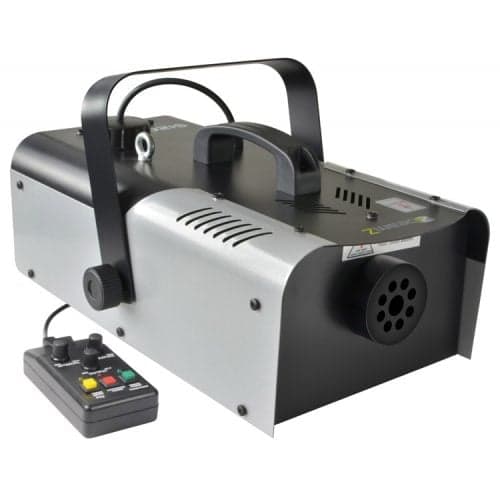 Beamz S1200 mk2 is a 1200W smoke machine supplied with a timer remote. It suits you if you want repeatable fog without building a DMX-controlled show.
DMX and timer control
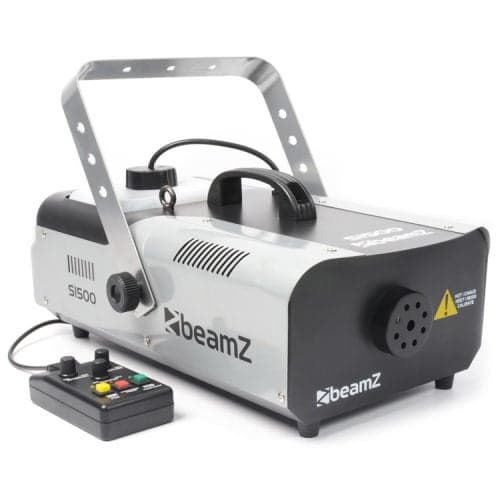 Beamz S1500 adds DMX and timer control for a programmed lighting setup. Check the current manual and product page for warm-up time, tank capacity, output and included controls.
Fine atmosphere for beams
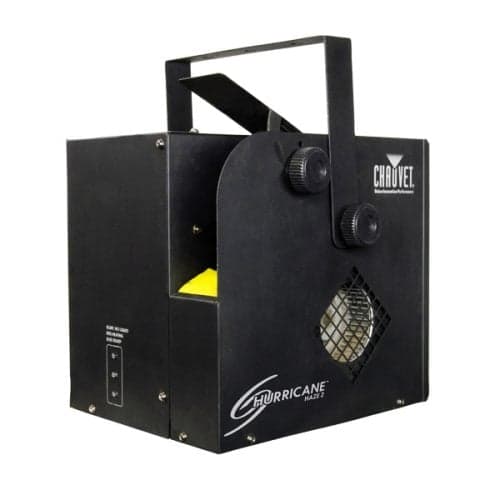 Chauvet DJ Hurricane Haze 2D is a water-based haze example with timer-remote and DMX control. Consider it when even beam definition matters more than obvious fog bursts.
Floor-hugging fog
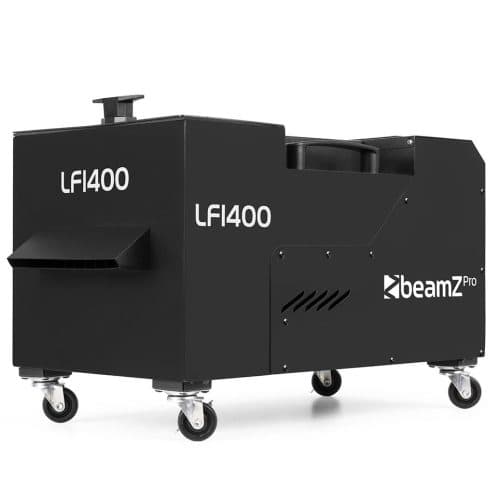 BeamzPRO LF1400 uses a water-based, carbon-dioxide-free process and offers DMX control. Allow additional preparation and confirm that the venue permits the effect.
Current smoke-machine options
Use the live product cards below to check current price and availability.
-
 Free ShippingOriginal price was: $69.$62Current price is: $62.
BeamZ S553L Smoke Machine with 3x RGB LEDs and Remote
-
 Free ShippingOriginal price was: $169.$152Current price is: $152.
Beamz S1200 mk2 Smoke Machine 1200W
-
 Free ShippingOriginal price was: $219.$197Current price is: $197.
Beamz S1500 Smoke Machine DMX with Timer Remote
-
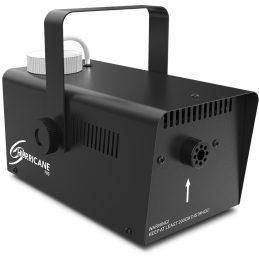 Free ShippingOriginal price was: $99.$89Current price is: $89.
Chauvet DJ Hurricane 700 Smoke Machine – 700W
-
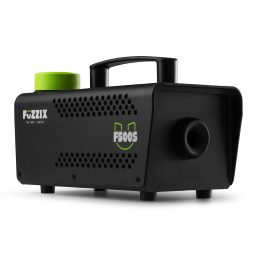 Original price was: $49.$44Current price is: $44.
Fuzzix F500S Party Smoke Machine 500W
-
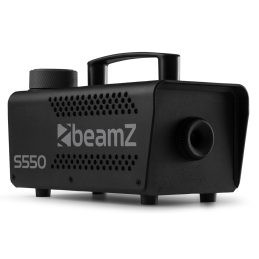 Free ShippingOriginal price was: $59.$53Current price is: $53.
BeamZ S550 Smoke Machine with Wireless Remote & Fluid 550W
-
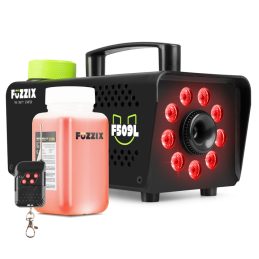 Free ShippingOriginal price was: $89.$80Current price is: $80.
Fuzzix F509L Party Smoke Machine with 9x RGB LEDs
Smoke machine for Halloween
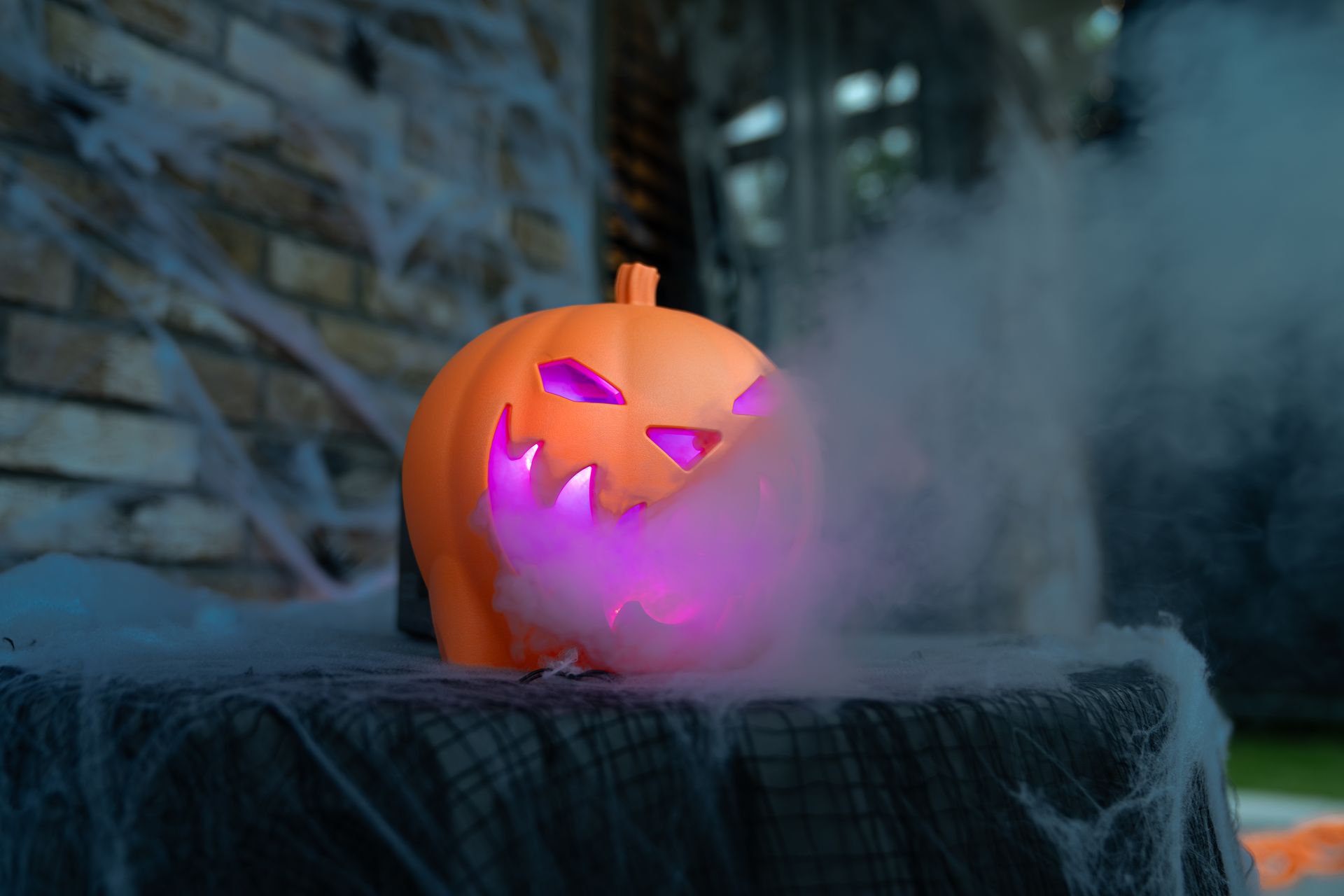
Need to spook things up a little for a Halloween display or theme party? Smoke and fog machines are a great way to create a creepy and mysterious atmosphere around an entrance, dance floor or haunted-house display, especially when you combine it with coloured lighting for added intrigue and an ominous mood. Standard fog is usually the most suitable effect here because you can trigger a burst at the right moment and let it drift and swirl around in the still air. Chuck in a low fog machine to mimic the morning dew surrounding a graveyard, creepy forest or swamp setup! A timer, wired remote or DMX control allows you to control the effect to line up with lighting, music or the arrival of your guests. Test your Halloween fog machine before the event so you can see how quickly the fog spreads and clears.
Halloween accessory: BeamZ lighted pumpkin cover
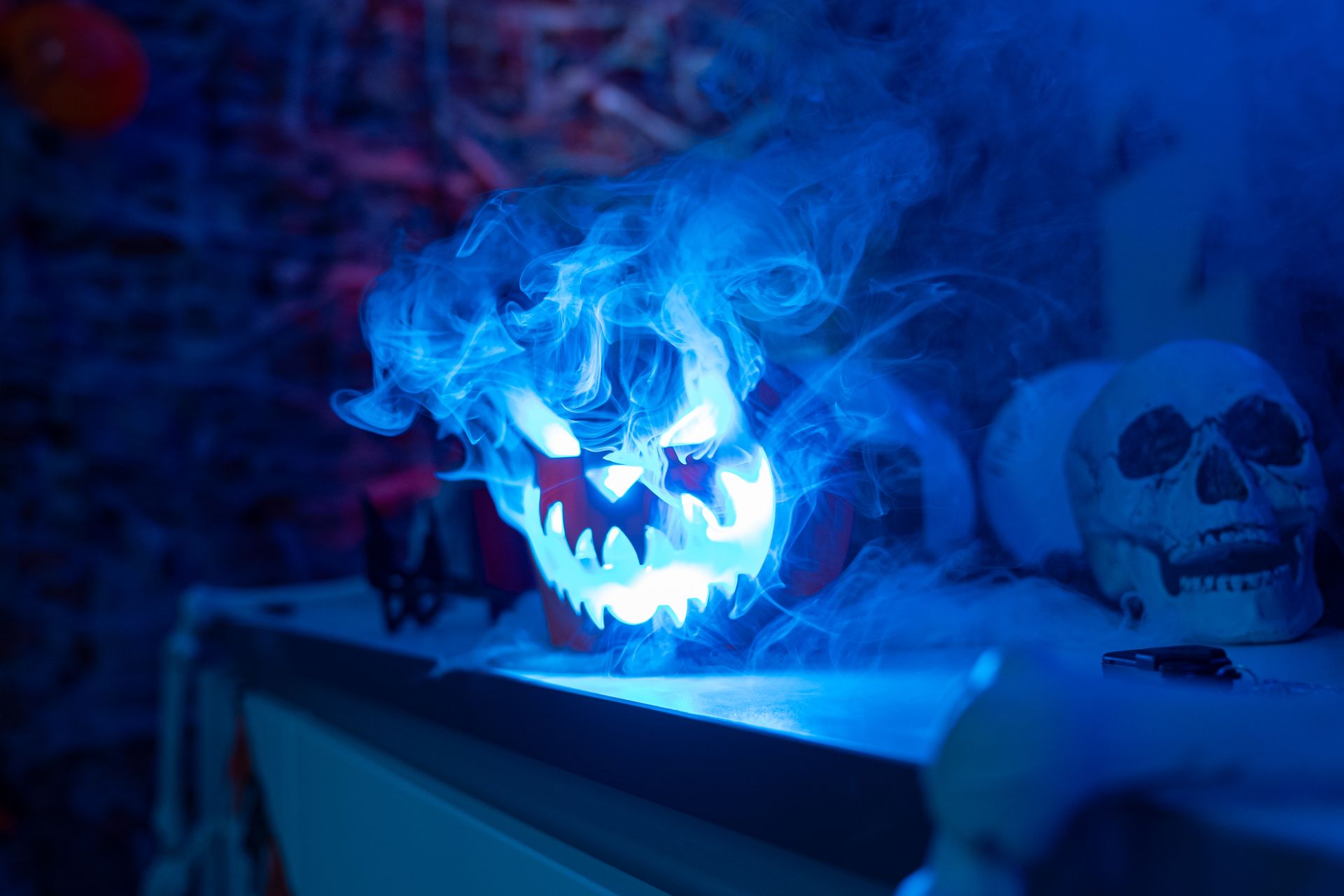 If you already have a compatible BeamZ machine, the BeamZ Halloween Pumpkin Smoke Machine Accessory turns the output into a smoke-spewing pumpkin display. The cover lines up the machine’s smoke outlet and lights with the pumpkin’s eyes and mouth. It’s compatible with the BeamZ S553L, F500S and F509L; when paired with the S553L, you also get the haunted laugh effect triggered through the machine!
Keep in mind: this product is the pumpkin cover only. The compatible smoke machine is sold separately.
Find the right smoke machine at DJ City
The best machine for your setup depends on the effect, room, airflow, control method and venue rules. If you are still unsure, bring those details to the DJ City team, and we can help you narrow down the machine, compatible fluid and controls you will need.
Frequently asked questions
Is a smoke machine the same as a fog machine?
Usually, yes. In everyday event use, “smoke machine” and “fog machine” commonly describe the same type of unit: a machine that heats approved fog fluid to create a visible aerosol. It is artificial fog, not smoke from combustion, although manufacturers and retailers do not always use the two names consistently.
Is a smoke machine safe to use indoors?
A smoke machine can be used indoors when the machine, approved fluid, ventilation and placement are suitable for the room. Follow the manual and safety data sheet, get the venue’s permission, keep the required clearances and begin with a low output. Stop using it if visibility, breathing comfort or floor conditions become a concern.
Can a smoke machine trigger a smoke alarm?
It can happen. The tiny droplets produced by fog and haze machines can enter some smoke detectors and be interpreted as smoke, particularly in a small room or when the effect is dense. The risk depends on the detector, airflow, and output level, so check with the venue, get written approval, and follow its testing procedure before the event.
Which smoke-machine fluid should I use?
Use the fluid approved by the manufacturer for your exact machine. Check the manual, fluid label and safety data sheet before filling the tank, because standard fog, haze and low-fog fluids are not automatically interchangeable. The wrong formula can affect the output, clog the machine or damage internal components.
Can I put water in a smoke machine?
Do not use plain water as a substitute for fog fluid in a standard smoke machine. It generally produces short-lived steam instead of a lingering effect and may not be approved for the heater or pump. Some low-fog machines use water in a separate reservoir, so follow the instructions for your exact model.
How long does smoke-machine fluid last?
Runtime depends on tank capacity, machine output, trigger frequency and duty cycle, so treat broad “hours per litre” estimates as rough guides and use the manual’s consumption figures where available. As for storage life, the shelf life depends on whether the bottle has been opened, how it is stored and the date or guidance on its label.
How do I clean a smoke machine?
Let the machine cool, disconnect it as instructed and follow the cleaning procedure in its manual. Use a commercial fog-machine cleaner or flushing mixture only when the manufacturer approves it for that model, then wipe the cooled exterior with a soft cloth. Do not assume that vinegar, tap water or another household mixture is suitable. Our smoke-machine cleaning guide has a general walkthrough.
Can I use a smoke machine outside for Halloween?
You can use a smoke machine outdoors for Halloween, but even a light breeze can move the fog away fairly quickly. Place the machine somewhere dry and sheltered, protect its power connections from moisture and test the effect before guests arrive. You may need to trigger shorter, more frequent bursts to keep the fog where you want it.
Is smoke or haze better for lasers?
Haze is usually the better fit when you want laser beams to stay visible throughout a set because its finer atmosphere spreads more evenly. Smoke or fog creates thicker clouds that suit short, dramatic cues. Your final choice still depends on the room, airflow, audience, detector system and venue rules.
Further reading
- How to Clean Your Smoke Machine in 5 Easy Steps
- A Guide to DMX Basics: Everything You Need to Know to Get Started
- A Guide to Party Lighting for Small Spaces
- The Complete Beginner’s Lighting Guide for Mobile DJs
- The Different Types of Party Light Effects
- How to Use Party Lighting to Create Ambience, Not Glare
- Get Your DJ Booth Halloween Ready