
The Best DJ Headphones 2026: A DJ City Buying Guide
Finding good headphones for DJing is crucial for having a smooth and hassle-free DJ performance. But when you’re gearing up for your first gig, or looking to upgrade your existing pair, the decision involves more than simply choosing a logo you’ve seen your favourite DJ use, or trying to get the widest frequency range possible. You need to look for a secure, comfortable fit, healthy noise isolation, a cable that works with your gear, and earcups that suit the way you monitor your cues. In this guide, DJ City will help you answer what the best DJ headphones are in 2026.
TL;DR: My all-around pick for the best DJ headphones is the Sennheiser HD 25. It is light, easy to repair and built around the quick one-ear monitoring style many DJs prefer. If you are buying your first proper pair, the Pioneer DJ HDJ-CUE1 is the better-value starting point. If on-ear pressure bothers you, skip both and look at the over-ear HDJ-X10.
Disclosure: DJ City sells the headphones and accessories discussed in this guide. Recommendations are based on current product information, manufacturer documentation and suitability for the stated use case. Fit, comfort and sound preferences vary, so try headphones on where possible. Prices and stock can change.
Best DJ headphones: quick picks
- Best overall: Sennheiser HD 25
- Best budget DJ headphones for beginners: Pioneer DJ HDJ-CUE1
- Best lightweight alternative: Pioneer DJ HDJ-CX
- Best modern on-ear all-rounder: RØDE NTH-50
- Best wired headphones: Pioneer DJ HDJ-X10
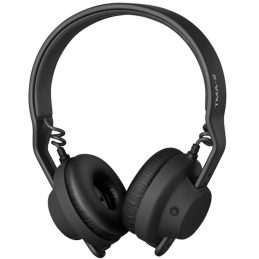
- Best wireless option: AIAIAI TMA-2 DJ Wireless
If you want the most advanced wireless system in the range, the AlphaTheta HDJ-F10 with transmitter is the flagship upgrade. It is a serious jump in price, though, so make sure cable-free booth monitoring is genuinely important to you.
Beginner and professional DJ headphones at a glance
Swipe sideways to compare all columns.
| Model | Best for | Fit | Weight | Connection | Main thing to consider |
|---|---|---|---|---|---|
|
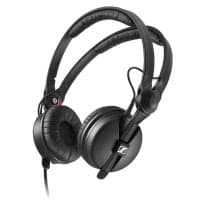
Regular gigs and repairability | On-ear | About 140g | Fixed 1.5m cable, 3.5mm plug with 6.35mm adaptor | The on-ear pressure and isolation will not suit everyone |
|
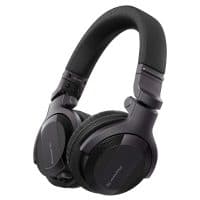
Budget-conscious beginners and first DJ setups | On-ear | 215g | Detachable coiled cable | Less refined than the pricier models |
|
Lightweight monitoring and long sets | On-ear | 136g | Detachable straight and coiled cables | Costs more than the HD 25 without being as widely serviceable |
|
DJing, production and everyday monitoring | On-ear | 220g | Locking cable connects to either earcup | More neutral presentation than some bass-heavy DJ headphones |
|
Loud booths and premium over-ear monitoring | Over-ear | 328g | Detachable straight and coiled cables | Heavy and expensive beside the on-ear options |
|
Low-latency wireless DJing | On-ear | 217g | W+ Link, Bluetooth and wired operation | Its bass-forward sound and wireless features come at a premium |
Stock note: Follow the product links for current pricing, colours and availability. Specifications can also vary between regional versions and product revisions.
Shop the featured DJ headphones
Current product images, pricing and stock are loaded directly from DJ City’s catalogue.


The best DJ headphones list
1. Best overall: Sennheiser HD 25
 In first place, the HD 25 is easily the overall winner in terms of practicality. At roughly 140 grams, it barely adds anything to your gig bag, the split headband is pretty stable, and the capsule can rotate away for one-ear cueing while sitting on your head. Almost every major part can be replaced separately, including the cable, drivers, headband and pads, so you don’t have to worry about buying a brand new pair if it snaps during those hectic touring schedules!
Its punchy bass response makes kicks and basslines stand out, while the compact on-ear design lets your ears breathe during those hot booth sessions. The only trade-off is the fit: Some people can wear an HD 25 for hours, while others hate the pressure of an on-ear pad and prefer the fuller seal of an over-ear cup. If you already know that on-ear headphones annoy you, go straight to the HDJ-X10.
Why I would choose it
- Very light and secure for active DJing
- Rotating capsule suits one-ear monitoring
- Replacement parts are easy to find
- Compact enough to live in a gig bag
2. Best budget DJ headphones for beginners: Pioneer DJ HDJ-CUE1
 The HDJ-CUE1 is where I would start if you have just bought your first controller and starting your DJ journey. It gives you 90-degree rotating earcups, a foldable frame and a detachable coiled cable at a price that leaves room in the budget for speakers, cables or music. The 50mm drivers have a lively low end for helping you line up kick drums in a mix.
You can buy a Bluetooth version, but getting the wired version is always a smarter choice for precise cueing and beatbatching, since Bluetooth is prone to latency issues. If you do choose the HDJ-CUE1BT, plug in the cable while mixing.
The Audio-Technica ATH-M20x is the other budget model worth considering. Its over-ear fit and studio-style tuning make sense if most of your mixing happens at home and you also want headphones for music production. For DJing itself, I would still buy the HDJ-CUE1 because the rotating cups, detachable coiled cable and folding frame are far more practical around a controller or mixer.
Why it makes sense for a beginner
- Affordable without feeling like a disposable pair
- Detachable cable and replaceable coloured pads
- Rotating earcups make one-ear practice straightforward
- Foldable design is easy to carry to lessons and parties
3. Best lightweight headphones: Pioneer DJ HDJ-CX
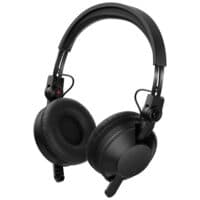
 The Pioneer HDJ-CX weighs about 136 grams, making it the lightest model in this guide. If heavier over-ear headphones start dragging on your neck halfway through a set, this compact Pioneer is worth a closer look. It uses swivelling earcups, a flexible headband and replaceable cables, and you get both straight and coiled options in the box.
This is the closest direct rival to the HD 25. I would still choose the Sennheiser for its long-established parts ecosystem, but the HDJ-CX is the better pick if its headband, pad shape or sound suits you more. Comfort is personal enough that trying these two side by side is worth the effort.
Why it stands out
- Exceptionally light for long sessions
- Supplied with straight and coiled detachable cables
- Swivelling on-ear design works well for quick cue checks
- Strong alternative for anyone who does not get on with the HD 25
4. Best modern on-ear all-rounder: RØDE NTH-50
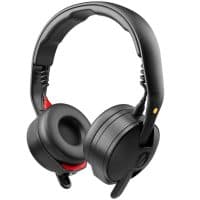
 The NTH-50 takes the compact on-ear idea in a slightly different direction. Its 40mm driver and closed aluminium earcups are tuned with production and monitoring in mind, so this is the pair I would shortlist if you move between DJing, track preparation and studio work. The coiled cable can lock into either earcup, which is a small detail that becomes very useful when your mixer sits to one side.
At 220 grams, it is heavier than the HD 25 and HDJ-CX, but it still feels like a compact professional headphone. The replaceable pads, headband and cable also makes it last longer than a cheap sealed pair that gets binned once one part wears out.
Why it belongs on the list
- Balanced all-rounder for DJing and production
- Cable can connect to either the left or right earcup
- Replaceable cable, cushions and headband
- Includes a coiled cable, adaptor and storage pouch
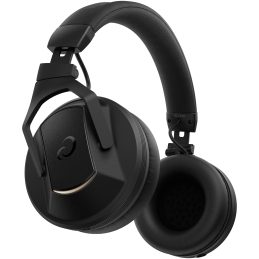
5. Best wired headphones: Pioneer DJ HDJ-X10
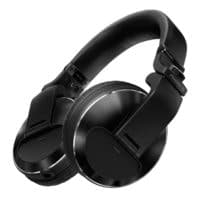
 The HDJ-X10 is the pair to buy when you want a proper over-ear seal and a tougher, more robust build. Its 50mm drivers, swivelling housings and closed cups are designed for loud professional environments, while the supplied straight and coiled cables cover booth and everyday monitoring duties. The ear pads and headband cushion also use a nano coating intended to resist deterioration from sweat and regular cleaning.
You pay for all of that in dollars and weight. At about 328 grams, the HDJ-X10 feels far more sturdy than the on-ear models above. I would choose it for strong isolation or a clear preference for over-ear comfort. For a small home setup, the HD 25 or HDJ-CUE1 is easier to justify.
Why it earns the premium position
- Over-ear cups give you a fuller physical seal
- Flexible swivel design supports different monitoring styles
- Straight and coiled detachable cables are included
- Robust case is included for transport
6. Best wireless DJ headphones: AIAIAI TMA-2 DJ Wireless
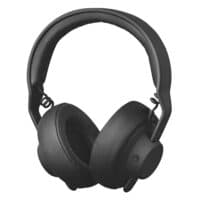
 The TMA-2 DJ Wireless solves the main problem with ordinary wireless headphones: latency. AIAIAI’s W+ Link system runs below 10 milliseconds, which is quick enough for beatmatching and cueing. You still have wired operation available, while Bluetooth covers casual listening sessions at home or on commutes.
The rest of it is just AIAIAI’s iconic TMA-2 design: modular low-profile construction, memory-foam on-ear pads and a bass-forward presentation that puts plenty of weight behind kicks. That low-end emphasis is intended mainly for electronic music, although it will be too pronounced for anyone chasing a neutral everyday headphone. DJs will buy this model mainly for its wireless convenience, low-profile design and eco-friendly modularity.
Why it is the wireless pick
- W+ Link provides sub-10ms low-latency audio
- Wired, Bluetooth and low-latency wireless modes cover different jobs
- Modular parts can be replaced or changed
- Strong bass emphasis helps kicks cut through while cueing
What should you look for in DJ headphones?
On-ear or over-ear?
On-ear headphones such as the HD 25, HDJ-CX and NTH-50 are compact, lighter and less hot since your ear is still partially exposed. They work particularly well if you cue with one earcup and keep the other ear open to the room. The downside is pressure directly on your ears, which can get irritating after long hours.
Over-ear models such as the HDJ-X10 surround your ears and generally provide a more complete seal. When you’re in a loud booth, over-ear helps isolate the sound. Plus, some people find the larger pads more comfortable. However, they tend to be bulkier, trap more heat and add weight around your neck. Neither one can check every box, there’s always going to be trade-offs.
Isolation matters more than a huge frequency range
Your headphones need to make the cue signal easy to follow beside the room sound. A secure seal and sensible tuning are more useful than an extreme frequency figure printed on the box. Better isolation may also help you hear the cue without pushing the level as hard, although you should still monitor at a responsible volume and take breaks during long sessions.
Check the cable and adaptor
Most DJ controllers and mixers use a 6.35mm headphone output, while portable gear commonly uses 3.5mm. A screw-on 6.35mm adaptor is ideal because it is harder to lose in a gig bag. Detachable cables are also worth paying for. A damaged cable is much cheaper to replace than a complete set of headphones.
Think about repairability
Pads and cables wear out. Hinges can take a beating too. The HD 25 and TMA-2 families are especially appealing because individual components are readily replaceable, while the HDJ-CUE1, HDJ-CX and NTH-50 also give you useful service options. If you gig regularly, replacement parts are a real buying feature.
Can you DJ with wireless headphones?
You can, but ordinary Bluetooth can introduce slight delays which make precise beatmatching feel out-of-sync. Bluetooth is better suited for casual listening sessions, not DJing.
However, Purpose-built wireless systems like AIAIAI’s W+ Link and AlphaTheta’s SonicLink are designed for low-latency DJ monitoring, and each requires its compatible transmitter or supported hardware. DJ City sells the HDJ-F10 transmitter bundle and the TMA-2 DJ Wireless, so you don’t need to look far!
Frequently asked questions
What are the best DJ headphones for beginners?
The Pioneer DJ HDJ-CUE1 is the best starting point for most beginners. It is affordable, foldable and fitted with rotating earcups and a detachable coiled cable. If your budget stretches further, compare it with the Sennheiser HD 25 before buying.
Are Sennheiser HD 25 headphones good for long DJ sets?
Yes, especially if you like a light on-ear fit. The HD 25 weighs about 140 grams and its split headband helps keep it stable. Some people find pressure on the ears tiring, so an over-ear model may suit you better if you are sensitive to clamp or wear glasses.
Do DJ headphones need a 6.35mm plug?
Many DJ mixers and controllers use a 6.35mm headphone socket, but headphones commonly terminate in a 3.5mm plug and include a 6.35mm adaptor. Check your controller or mixer before the gig and keep a spare adaptor in your bag.
Are on-ear or over-ear headphones better for DJing?
On-ear headphones are usually lighter and easier to move for one-ear cueing. Over-ear headphones generally provide a fuller seal and may be more comfortable if you dislike pressure directly on your ears. Your monitoring style and fit preference matter more than the category name.
Can you use Bluetooth headphones with a DJ controller?
Bluetooth is usually too delayed for accurate cueing and beatmatching. Use a wired connection, or choose a purpose-built low-latency system such as AIAIAI W+ Link or AlphaTheta SonicLink with the correct transmitter.
How much should a beginner spend on DJ headphones?
You do not need the flagship model for your first setup. Start with a proper wired DJ headphone that has rotating earcups, a secure fit and a replaceable cable. The HDJ-CUE1 covers those basics well, while moving up to the HD 25 buys you lower weight and a much stronger replacement-parts ecosystem.