Best Record Players for Home Listening: DJ City Australia Top Picks (2026)
Buying your first record player can be a great way to spruce up your living quarters with some snazzy hi-fi goodness, while also making for a good convo starter. But with all the different technical features out there, finding the best record player can be overwhelming, especially if you’re not familiar with them in the first place. This guide aims to answer all your questions and share the best record players for various home listening use cases.
I’ve put this shortlist together around a) best for beginners, b) best automatic setup, c) best manual, d) best all-in-one speaker setup, and e) best direct-drive pick.
TL;DR: My winner for most first-time buyers is the Audio-Technica LP60XBT. Press start, and it handles the tonearm for you, while the built-in phono preamp gives you a straightforward path to powered speakers. Take the Audizio RP337W if you need it to come with speakers out of the box.
Disclosure: DJ City sells the products in this guide. The recommendations are based on current product information, manufacturer documentation and cited independent specialist reviews. Prices and stock can change, so check the product links for today’s details.
The best record players: quick picks
- Best for most beginners: Audio-Technica LP60XBT
- Best automatic step-up: Audio-Technica LP3XBT
- Best manual hi-fi starting point: Reloop TURN2
- Best record player with speakers: Audizio RP337W
- Best premium direct-drive pick: Reloop TURN5
Want Bluetooth without paying LP3XBT money? The Audio-Technica LP60XBT is the one I’d check next. It keeps the beginner-friendly LP60X design, adds Bluetooth output and still connects to a wired system.
Best record players at a glance
Swipe sideways to compare all columns.
| Model | Best for | Operation | Drive | Phono preamp | Speakers / Bluetooth | Speeds | What else you need |
|---|---|---|---|---|---|---|---|
|
Your first vinyl setup | Fully automatic | Belt | Built-in, switchable | Speakers sold separately / Bluetooth available | 33⅓, 45 RPM | Powered speakers, or an amp and passive speakers |
|
Easy use with room to upgrade | Fully automatic | Belt | Built-in, switchable | Speakers sold separately / Bluetooth output | 33⅓, 45 RPM | Speakers or Bluetooth headphones |
| Building a manual hi-fi setup | Manual | Belt | No | Speakers sold separately / No Bluetooth | 33⅓, 45 RPM | Phono stage plus speakers and amplification | |
|
Getting everything in one package | Manual with auto-stop | Belt | Integrated system | Wireless speakers included | 33⅓, 45, 78 RPM | Nothing essential beyond records |
| A premium direct-drive setup | Manual | Direct | No | Speakers sold separately / No Bluetooth | 33⅓, 45, 78 RPM | Phono stage plus speakers and amplification |
Stock note: Pricing and availability can change. Follow the product links for today’s details before choosing your turntable.
The best record players for home listening
1. Best for most beginners: Audio-Technica LP60XBT
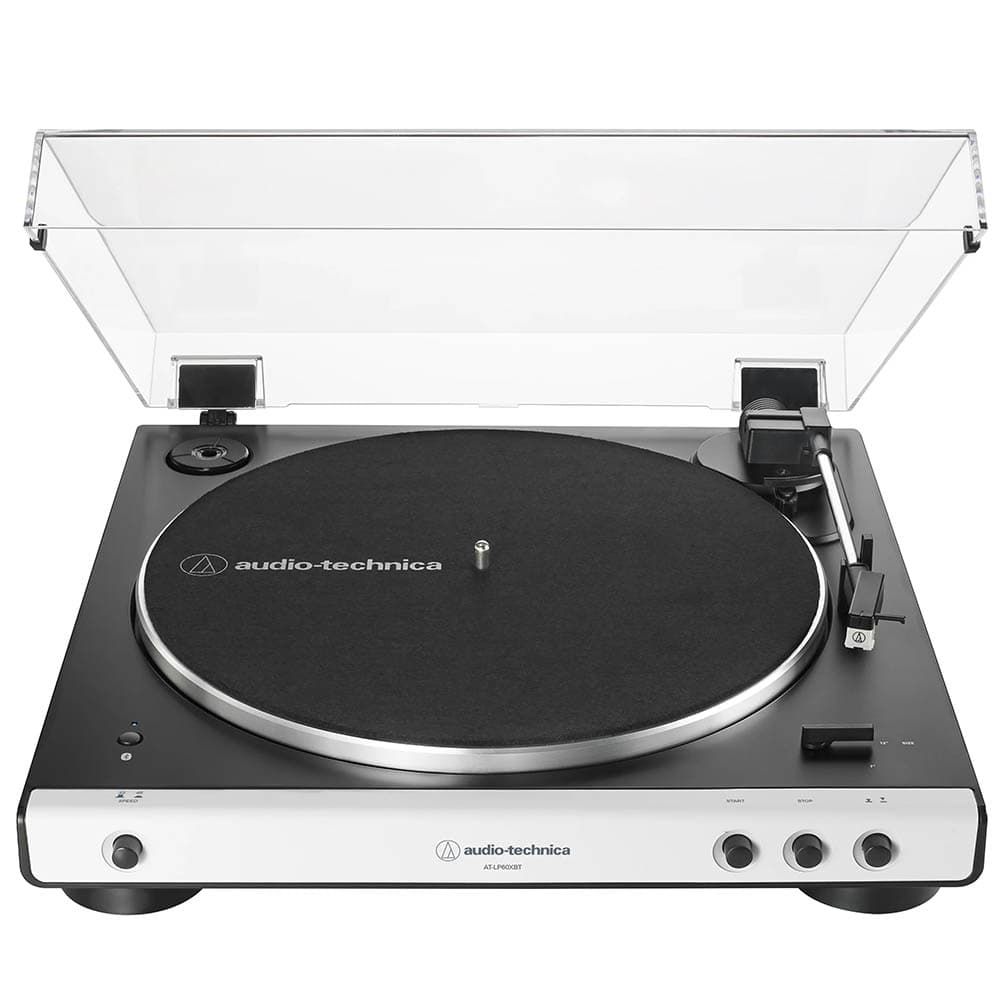
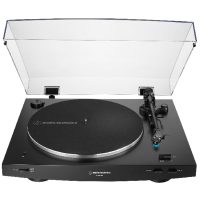
The LP60XBT is the turntable I’d put in front of most first-time buyers. Press start, and it positions the tonearm, plays the side and returns the arm when the record finishes. Its switchable phono preamp also connects directly to powered speakers or a standard line input, which removes one of the most common sources of confusion in a first vinyl setup. It’s Bluetooth-enabled, which also allows you to connect effortlessly to speakers, headphones, or other devices that support the high-quality aptX codec.
Audio-Technica lists two-speed playback, an aluminium platter and a replaceable stylus. The trade-off is a largely fixed cartridge and tonearm setup. If you catch the upgrade bug, the LP3XBT, TURN2 and TURN5 give you much more to adjust.
Why it stands out
- Start, stop and tonearm return are fully automatic, which is handy when you’re new to vinyl.
- The built-in phono preamp makes your first setup much easier.
- You can replace the stylus, and Audio-Technica offers an elliptical upgrade for the LP60X family.
Keep in mind
- The cartridge is integrated, and the setup is largely fixed, so your upgrade options are fairly limited.
- You’ll need to add speakers to complete the system.
2. Best automatic step-up: Audio-Technica LP3XBT
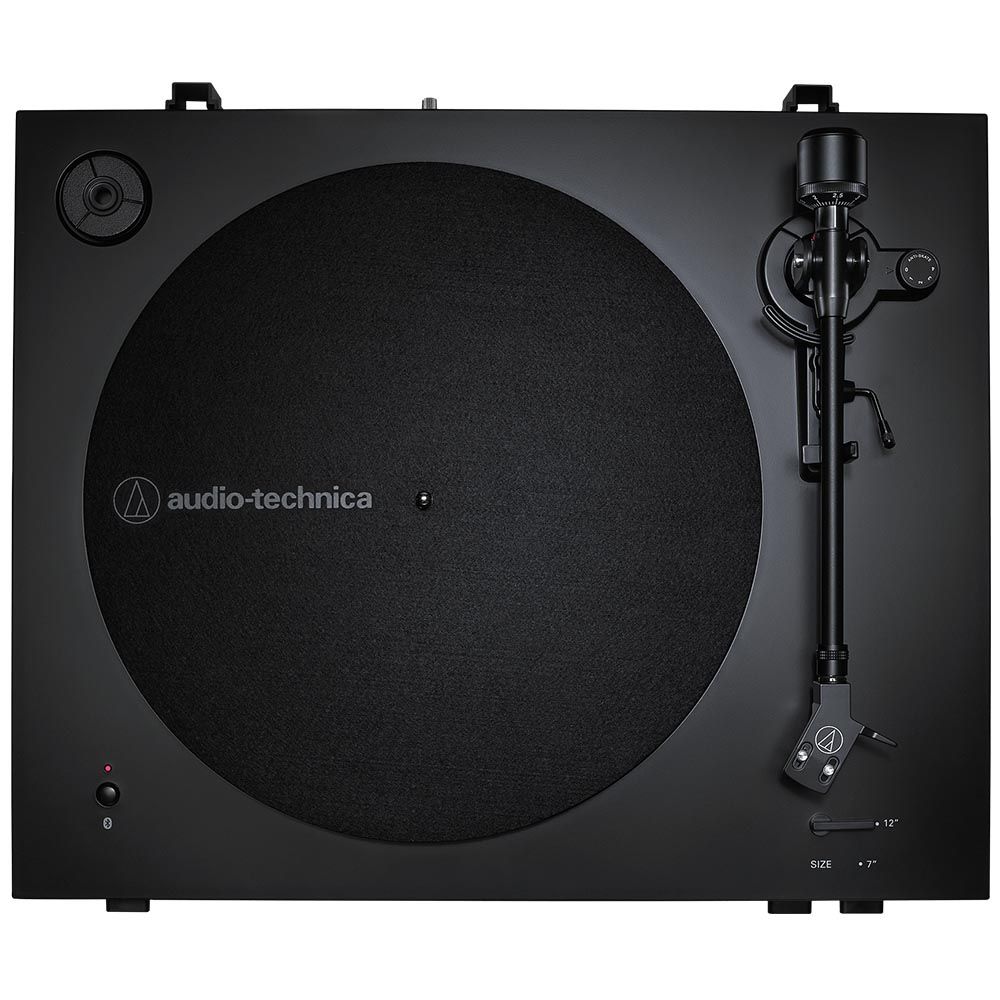 I think the LP3XBT is worth the higher price if you want automatic operation with the flexibility to upgrade its tonearm and cartridge in the future. You still press a button to start a record, but the adjustable counterweight, removable universal headshell and AT-VM95C cartridge give you the freedom to customise it to your liking.
It also has a switchable phono preamp and Bluetooth 5.2 with aptX Adaptive support, so you can either connect it to a wired hi-fi for everyday listening, or switch to compatible Bluetooth speakers or headphones so you don’t have to run cables across your room.
Why it stands out
- You still get the convenience of automatic operation, along with an adjustable tonearm and removable headshell.
- Wired and Bluetooth outputs give you a few sensible ways to fit it into your home.
- The VM95 cartridge family gives you a straightforward stylus-upgrade path.
Keep in mind
- It costs a fair bit more than the LP60XBT, so make sure you’ll actually use the extra adjustment or Bluetooth.
- Bluetooth is obviously convenient, but we still recommend wired connections since that gives you the cleanest signal and avoids annoying delays and choppy audio output.
- You’ll still need speakers or compatible Bluetooth headphones.
3. Best manual hi-fi starting point: Reloop TURN2
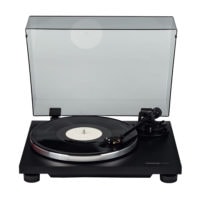
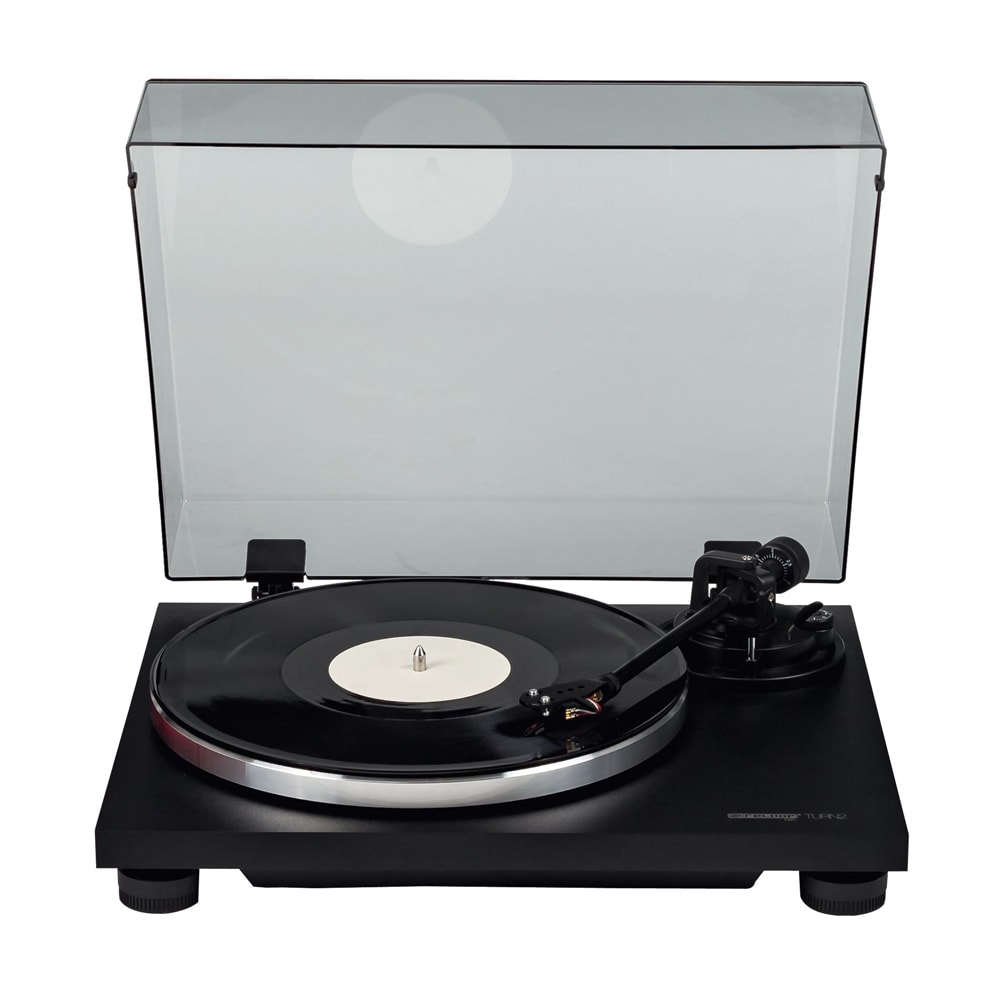 I’d choose the TURN2 if you want to learn the hands-on side of a traditional hi-fi setup. You cue every record yourself and set the counterweight and anti-skating, which is great for learning and getting physically involved with your records. Also, the removable headshell and cartridge give you the option to upgrade or replace it if it needs upgrading or gets faulty. But don’t worry, the included Ortofon OM10 phono cartridge allows you to change the tonearm mass compatibility due to its bonded elliptical stylus and a removable top weight plate.
This TURN2 vinyl turntable is super competitive among entry-level manual decks, but there’s one thing to note: it sends a phono-level signal through RCA, which might be a bit quiet. So you might need an additional phono preamp to boost the audio signal volume for standard speakers or through your current amplifier.
Why it stands out
- You get an Ortofon OM10 elliptical cartridge straight out of the box.
- The adjustable counterweight, anti-skating and removable headshell give you plenty to work with.
- Detachable RCA connections make it easy to replace or change the cable.
Keep in mind
- You’ll need to cue the stylus and return the tonearm yourself.
- You may need a phono stage, amplifier and speakers if you don’t have that already.
- It plays 33⅓ and 45 RPM records. If you collect 78s, this isn’t your deck.
4. Best record player with speakers: Audizio RP337W
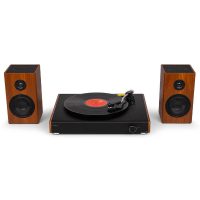
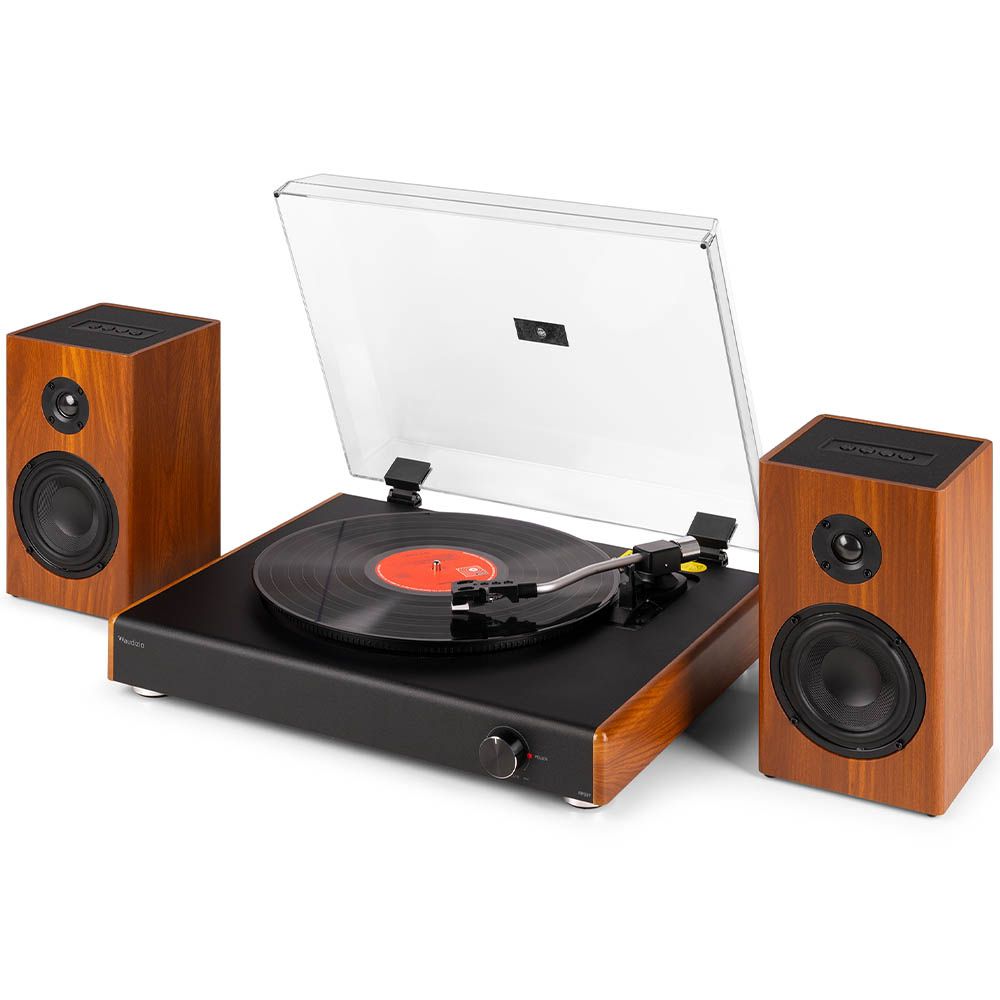 The RP337W is my pick for those looking for an all-in-one player that comes with speakers to play your vinyl out of the box. Its two rechargeable wireless speakers save you from matching a phono stage, amplifier and separate speaker pair, and they can also play music from your smartphone via Bluetooth. For those who value convenience and want to build a cosy listening lounge, this is our pick.
Why it stands out
- You get the turntable, amplification and two wireless speakers in one package.
- It covers 33⅓, 45 and 78 RPM records and includes auto-stop.
- The wireless speakers allow you to place them anywhere in the room for wider stereo coverage.
Keep in mind
- The all-in-one design gives you fewer options when you decide to upgrade individual components.
- Check the correct stylus requirement before you play older 78 RPM shellac records.
5. Best premium direct-drive pick: Reloop TURN5
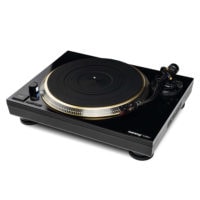
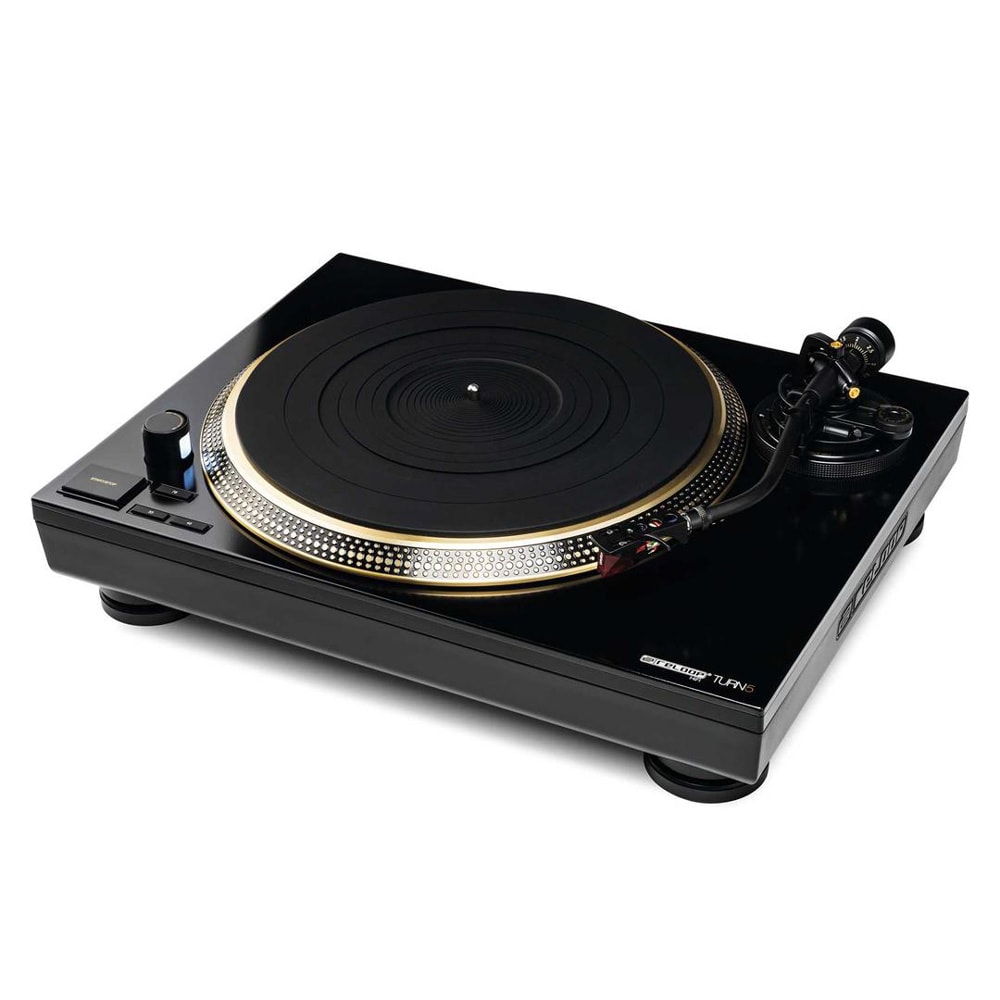 The TURN5 is for all the serious hi-fi enthusiasts that want an eye-catching centrepiece for their listening lounge. Its quartz-controlled direct-drive motor starts quickly and maintains a steady and accurate speed, and the Ortofon 2M Red cartridge, adjustable anti-skating and vertical tracking angle give you plenty of control over how you want to play. It also adds a removable headshell and a heavy metal chassis for a premium finish, hence the higher price point. It uses PHONO outputs, so you might want to budget for a phono preamp if your existing amplifier doesn’t already have a PHONO input.
Why it stands out
- Quartz-controlled direct drive, a damped platter and a substantial chassis help keep playback stable.
- You get an Ortofon 2M Red cartridge and plenty of tonearm adjustment for a serious separates system.
- It supports 33⅓, 45 and 78 RPM, provided you use the correct cartridge and stylus for the record.
Keep in mind
- You’ll need a phono stage and suitable amplification.
- It’s fully manual and considerably heavier than the beginner models.
- There’s no pitch fader. If you plan to mix or scratch, have a look at a purpose-built DJ turntable.
Compare the featured record players
Current pricing and stock are loaded directly from DJ City’s catalogue.
-
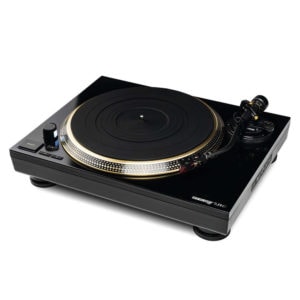 Free Shipping$1249
Reloop TURN5 Direct Drive HiFi Turntable
-
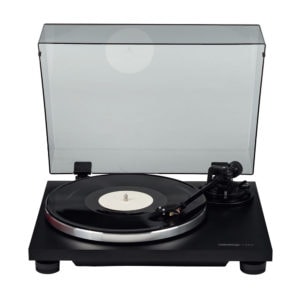 Free Shipping$499
Reloop TURN2 Analogue HiFi Turntable – Black
-
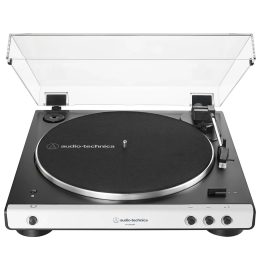 Free Shipping$340
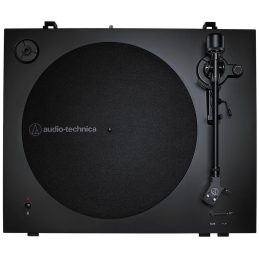
Audio Technica LP60XBT-WH Fully Automatic Wireless Belt-Drive Turntable
-
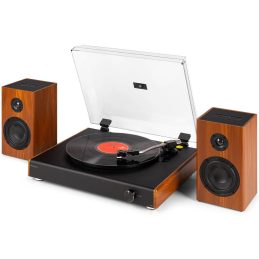 Free Shipping$259
Audizio RP337W Record Player with Wireless Speakers – Wood
-
 Free Shipping$599
Audio Technica LP3XBT Automatic Belt-Drive Turntable
How we chose these record players
I started with record players currently listed by DJ City and gave each place in the shortlist a clear job. I compared automatic and manual operation, drive systems, cartridge options, phono-stage requirements, Bluetooth direction, supported speeds and the extra gear needed to play a record.
I checked the specifications against current DJ City listings and manufacturer documentation, then cross-checked the broader advice with reviews and guides from What Hi-Fi?, TechRadar, SoundStage!, Hi-Fi Choice, Hi-Fi News and Audio Advice. I also looked at the questions that repeatedly catch first-time buyers, especially speaker matching, phono preamps, cheap all-in-one players and future upgrades.
The recommendations are research-based. Sound quality and measured-performance judgements come from the independent reviews linked beside the relevant turntables, while my verdicts focus on the setup, features and type of listener each model suits.
What should you look for in a record player?
Plan the complete system
The turn table is just one piece of the puzzle, as you would still need speakers, amplification, a phono stage and the right cables, so check what comes in the box so you know what else you’ll need to add on if anything.
Automatic or manual operation
With a fully automatic model, you press a button and let the turntable position and return the tonearm for you. That’s pretty convenient, especially if you live with roommates and you’d rather keep their fingers away from the cantilever. It’s also nice on those nights when you just want to put on a record and relax.
Manual decks require you to pick up and cue the stylus onto the record yourself, which means you’ll need to return to the deck once it’s done playing a record, but they also give you more control over the tonearm and cartridge.
Belt drive or direct drive
A belt-drive turntable uses a belt to spin the platter, with the motor positioned away from it. A direct-drive model places the motor under the platter, giving you quick startup and accurate speed control. You’ll find most standard home-listening turntables generally use belt-drive, like a lot of Fenton and Audizio players, whereas direct-drive is reserved for the more beefy setups like Audio-Technica and Reloop.
Cartridge, stylus and upgradeability
The stylus sits in the groove, and the cartridge turns that movement into an electrical signal. When you’re comparing models, check whether you can replace the stylus, change the cartridge and adjust tracking force or anti-skating. If you want a set-and-forget setup, go with the fixed setup, but if you’re more hands-on, an adjustable one gives you room to experiment with different cartridges.
Built-in phono preamp
A turntable cartridge produces a very quiet signal, and a phono preamp, also called a phono stage, boosts and equalises it before it reaches a normal amplifier or powered speaker input. If you see a PHONO/LINE switch on the turntable, there’s usually a switchable preamp built in. A PHONO-only output means your amplifier needs a PHONO input, or you’ll need a separate phono preamp.
Check which way the Bluetooth signal travels
- Bluetooth output sends your records to compatible wireless speakers or headphones.
- Bluetooth input lets you play music from your phone through the record player’s speakers.
Bluetooth allows you to place your speakers anywhere in the room, but a wired connection gives you a guaranteed superior zero-latency audio output signal with no delays or choppy playback.
Record speeds
Most of the albums you’ll come across play at 33⅓ RPM, while singles commonly use 45 RPM. Older shellac records may need 78 RPM and a suitable stylus, so check both the speed and stylus before you put one on. A 78 RPM button by itself doesn’t confirm that the supplied stylus is right for shellac.
Stable placement and isolation
Giving your turntable a rigid, level surface prevents footsteps and speaker vibration from shaking it. If you’ve got bass-heavy speakers, put them on their own stands or furniture where you can. Audio Advice’s beginner turntable guide has a useful explanation of phono stages, tonearms, cartridges and isolation below!
What else do you need with a record player?
Powered-speaker setup
For the shortest path from record to music, pair a turntable with a built-in phono preamp with a set of powered speakers. The amplifier is already inside the speakers so you don’t need to rely on an external one for playback.
Traditional hi-fi setup
For a traditional hi-fi system, your turntable feeds a phono stage and an integrated amplifier, which outputs to speakers. If it’s wireless, a receiver will send the signal to the passive speakers. The phono stage can live inside the turntable or amplifier, or you can add it as a separate component.
- Audio cable: Many home turntables use stereo RCA cables. Check whether yours is fixed, supplied in the box or needs to be purchased separately.
- Phono preamp: You’ll need one when your turntable and amplifier both lack a built-in phono stage.
- Speakers and amplification: You can skip these as separate purchases when you choose a complete package such as the Audizio RP337W.
- Cleaning supplies: A decent record brush, stylus brush and suitable record-cleaning products will help keep dust away from your grooves and stylus.
- Replacement stylus: Find the correct replacement stylus for your cartridge before the original wears out, then you won’t be scrambling for one later.
Frequently asked questions
What is the best record player for a beginner?
I’d start with the Audio-Technica LP60XBT for its reliability, automatic operation and easy speaker connectivity. Spend more on the LP3XBT if you want Bluetooth, an adjustable counterweight and a cartridge platform you can upgrade properly.
Do I need speakers with a record player?
If it’s just the turntable component, then yes, you’ll need to connect yours to powered speakers or an amplifier that’s driving passive speakers. However, models like the Audizio RP337W already include them built-in out of the box, so you can hear your records as soon as you press play.
Do I need a phono preamp?
You need a phono stage somewhere in the signal chain, but some models like the AT-LP60X already have it built into its turntable or amplifier. The LP60XBT and LP3XBT have switchable phono preamps. With the Reloop TURN2 and TURN5, you’ll need an external stage or an amplifier with a PHONO input.
What is the difference between a turntable and a record player?
You’ll hear these terms used interchangeably nowadays, but strictly speaking, a turntable is the source component that spins your record and produces a phono signal, while “record player” can also describe a complete unit with amplification and speakers. Manufacturers and retailers aren’t always consistent with the wording, so check what actually comes in the box.
Is a belt-drive or direct-drive turntable better?
You can get a great home-listening turntable with either drive type. Belt drive is common in hi-fi and helps isolate the platter from the motor, while direct drive gives you quick startup and precise speed control. Go with belt-drive if you’re more hands-off with playback, and go with direct-drive if you want tracks to start up faster.
Is Bluetooth good for vinyl?
Bluetooth is great for flexible speaker placement or if you use wireless headphones. However, a wired connection avoids Bluetooth compression and for those prioritising sound quality. For modern convenience and wireless playback, choose a Bluetooth turntable.
How much should I spend on a record player?
You don’t need to spend a fortune, especially if If you already own powered speakers. At DJ City, you can find really affordable all-in-one systems that are in the $100-$200 range, like Audizio or Fenton.
Can a new record player play old records?
Most new turntables from modern brands like Audio-Technica cover 33⅓ and 45 RPM vinyl, while older 78 RPM shellac records need a deck with 78 RPM support and usually a suitable 78 stylus. Check the stylus before you play one because the standard microgroove stylus supplied with a turntable may be the wrong fit.
Can I DJ with these record players?
These picks are mainly for listening at home. If you want to mix or scratch, look at DJ City’s DJ Turntables for a purpose-built direct-drive deejaying turntables with pitch control, powerful torque and a purpose-built DJ cartridge for durability. Read our Vinyl DJing 101 guide to learn more about the gear and basics.
Find the right record player at DJ City
Still unsure whether you need automatic operation, a phono preamp or a complete speaker package? Have a chat with the DJ City team or drop into one of our Australian stores. Tell us what speakers or amplifier you already own, and we’ll help you build a system that connects properly from day one!
Sources and further reading
DJ City guides
- DJ City: Turntable Buying Guide
- DJ City: How to Record Vinyl to Your Computer
- DJ City: Essential Gear for Turntable DJs
- DJ City: Vinyl DJing 101
- DJ City: DJ Controllers vs Turntables vs CDJs
Independent expert research
- What Hi-Fi?: Best turntables 2026: top record players tested by expert reviewers
- TechRadar: The best turntables for all budgets
- Audio Advice: Beginner turntable guide: setup, phono stages and cartridges
- SoundStage! Access: Reloop TURN2 review
- Hi-Fi Choice: Reloop TURN5 review