
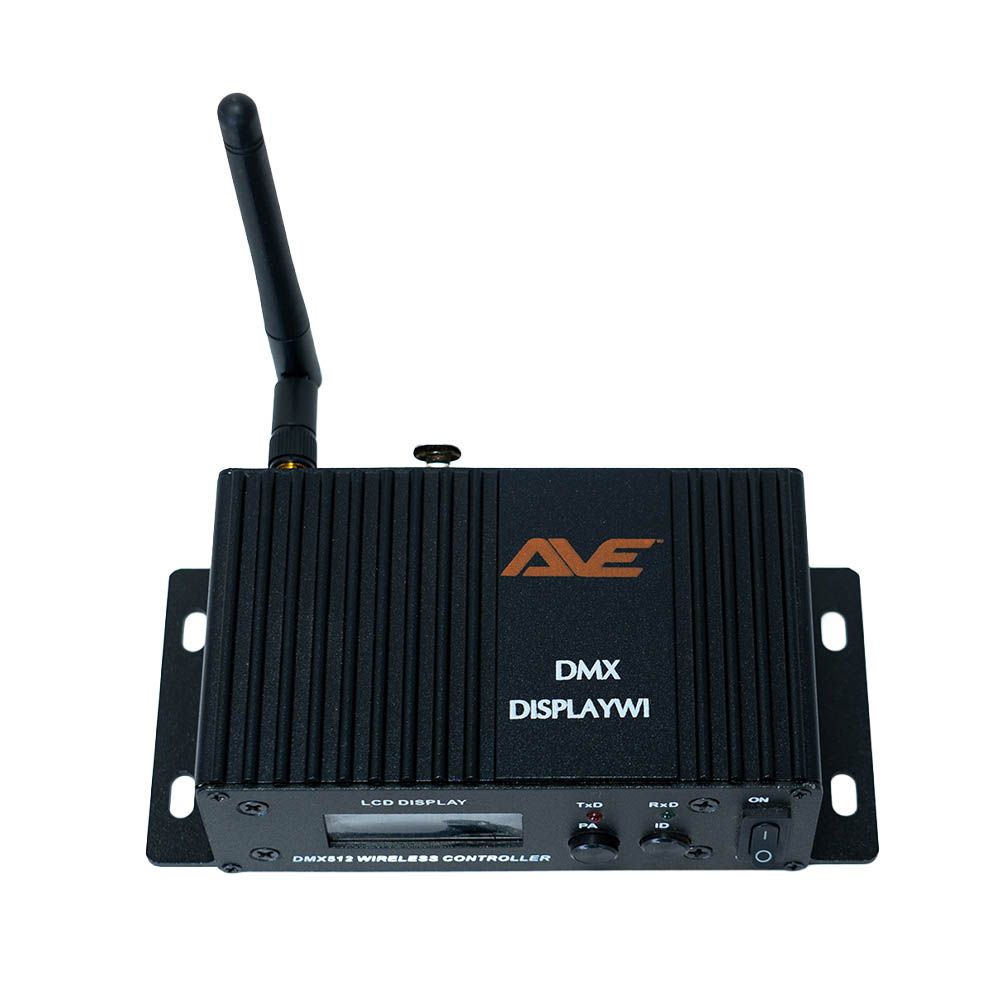
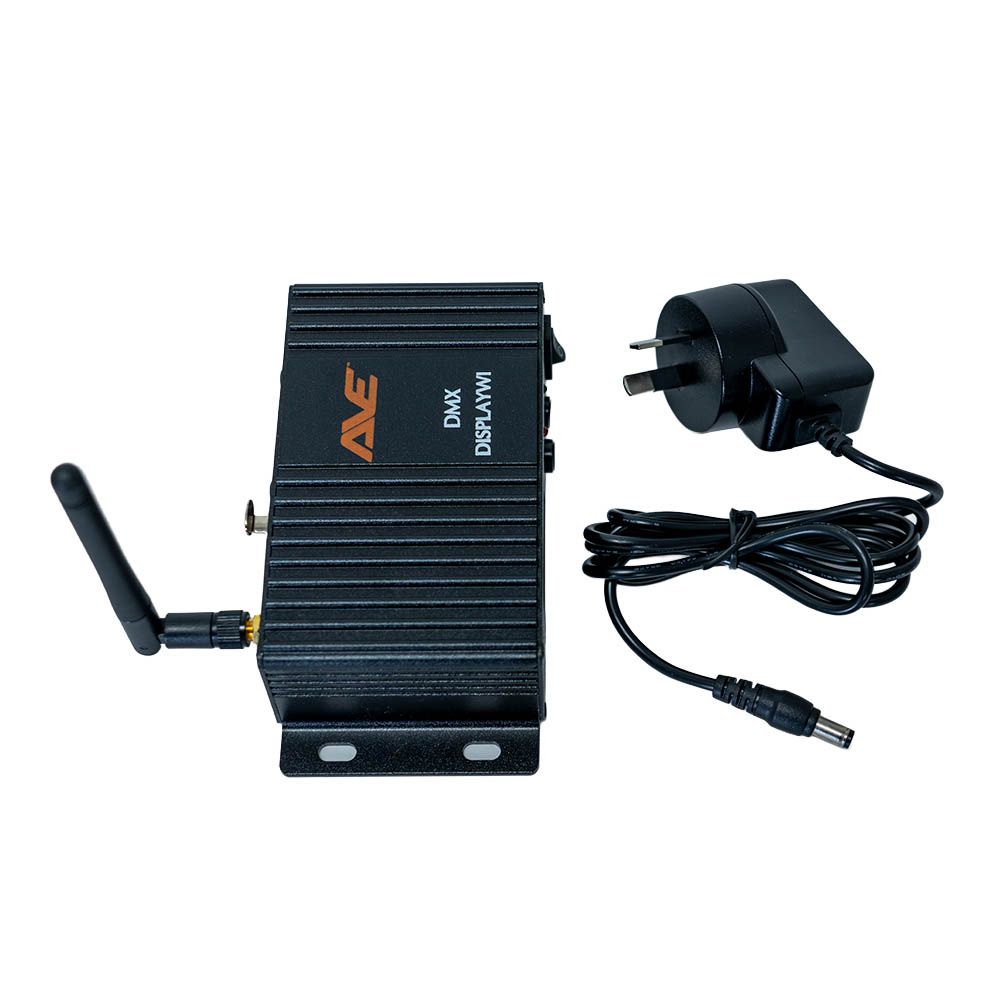
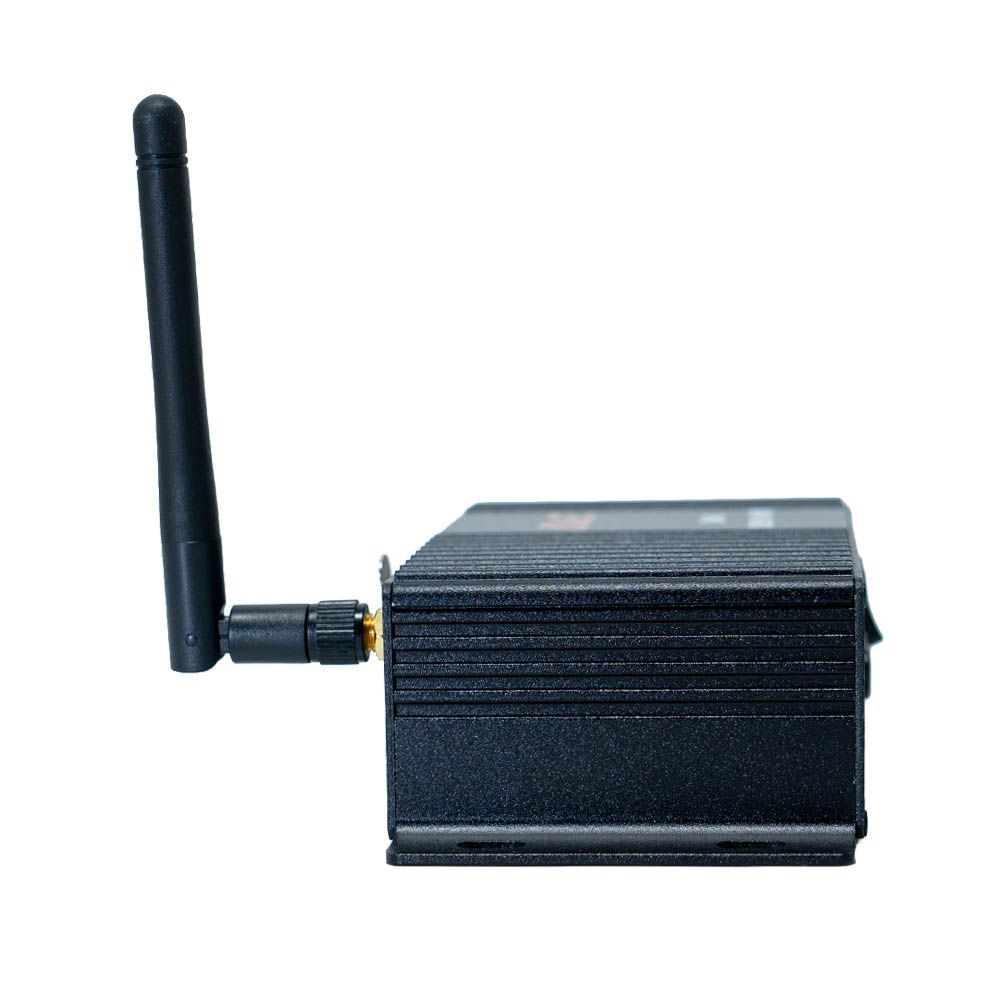
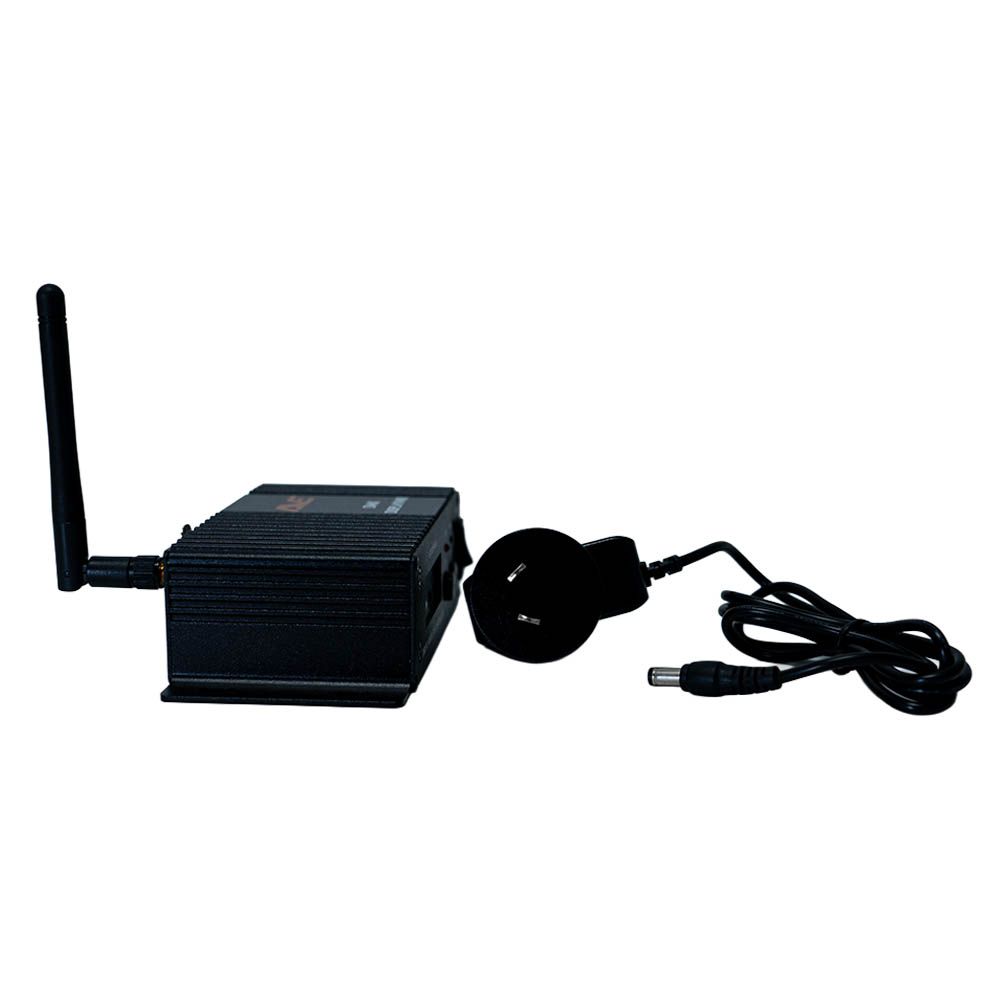


AVE DMX-DISPLAYWI DMX512 Wireless Receiver/Transmitter
Take standard DMX512 control beyond fixed cable runs with the AVE DMX-DISPLAYWI. This wireless receiver/transmitter sends console-generated DMX512 data over the 2.4G ISM band. Consequently, helping connect a lighting console to fixtures or link lighting units while keeping signal transmission real time and free from the limitations of connecting cable.
Wireless DMX Control Without Cable Runs
The DMX-DISPLAYWI transmits standard DMX512 protocol data wirelessly between a console and lighting, or between lighting units. That gives lighting control setups more freedom in how equipment is positioned, while the stated real-time operation keeps the wireless signal moving without time delay during transmission.
Automatic Frequency Management
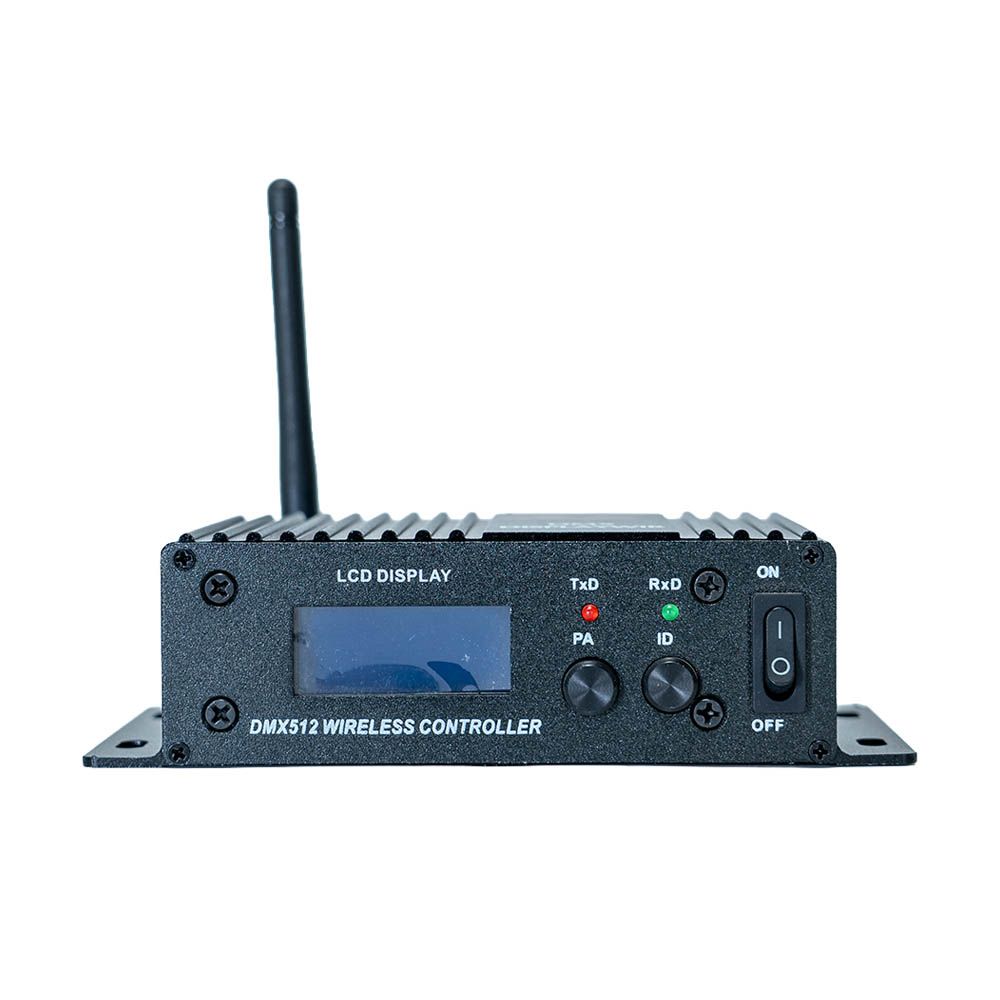
Its 126 frequency bands use FH design with automatic frequency-hopping synchronisation. The unit also offers 16 groups of ID codes, allowing 16 individual wireless networks to be set in the same place without interfering with each other, which is useful when multiple lighting systems operate nearby.
Clear Status Information
A 2X8 bit LCD displays the working condition, making the unit’s status easier to check during setup and operation. Four grades of power output are available, so the transmission level can be selected from the available options for the requirements of the wireless lighting arrangement.
Flexible DMX Connections
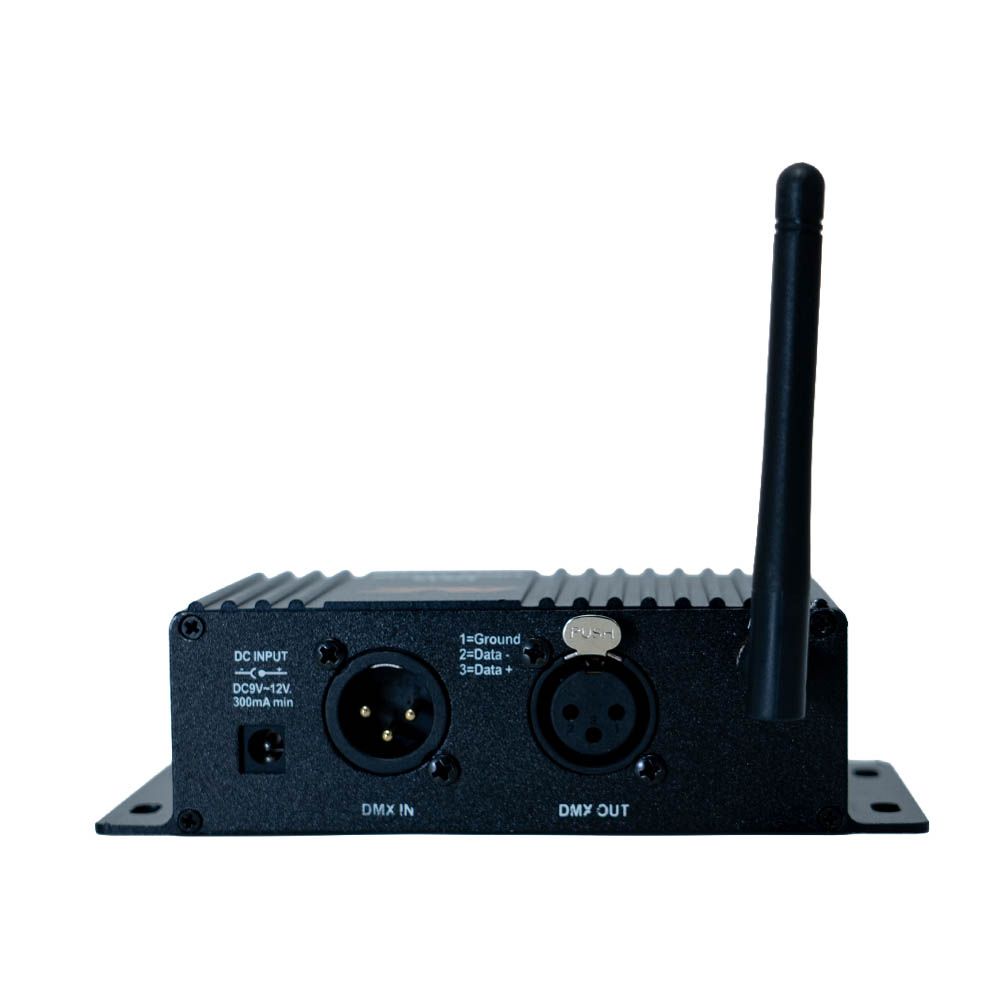
With 3/5 pin XLR DMX signal terminals, the transceiver connects with the specified DMX signal formats used in the setup. The 2.4G ISM working frequency is a global open band without permission limits, while the 700m visible-distance communication specification suits suitably positioned wireless lighting links.
Key Features
- Wireless transmission of standard DMX512 protocol data
- Automatic frequency-hopping synchronisation across 126 frequency bands
- 16 selectable ID groups for separate wireless networks
- 2X8 bit LCD for viewing working condition
- Four selectable power output grades
- 3/5 pin XLR DMX signal terminals